
PP8 Teen Patti: A Mobile Reader's Guide to Table Labels
By pp8games.com · Updated
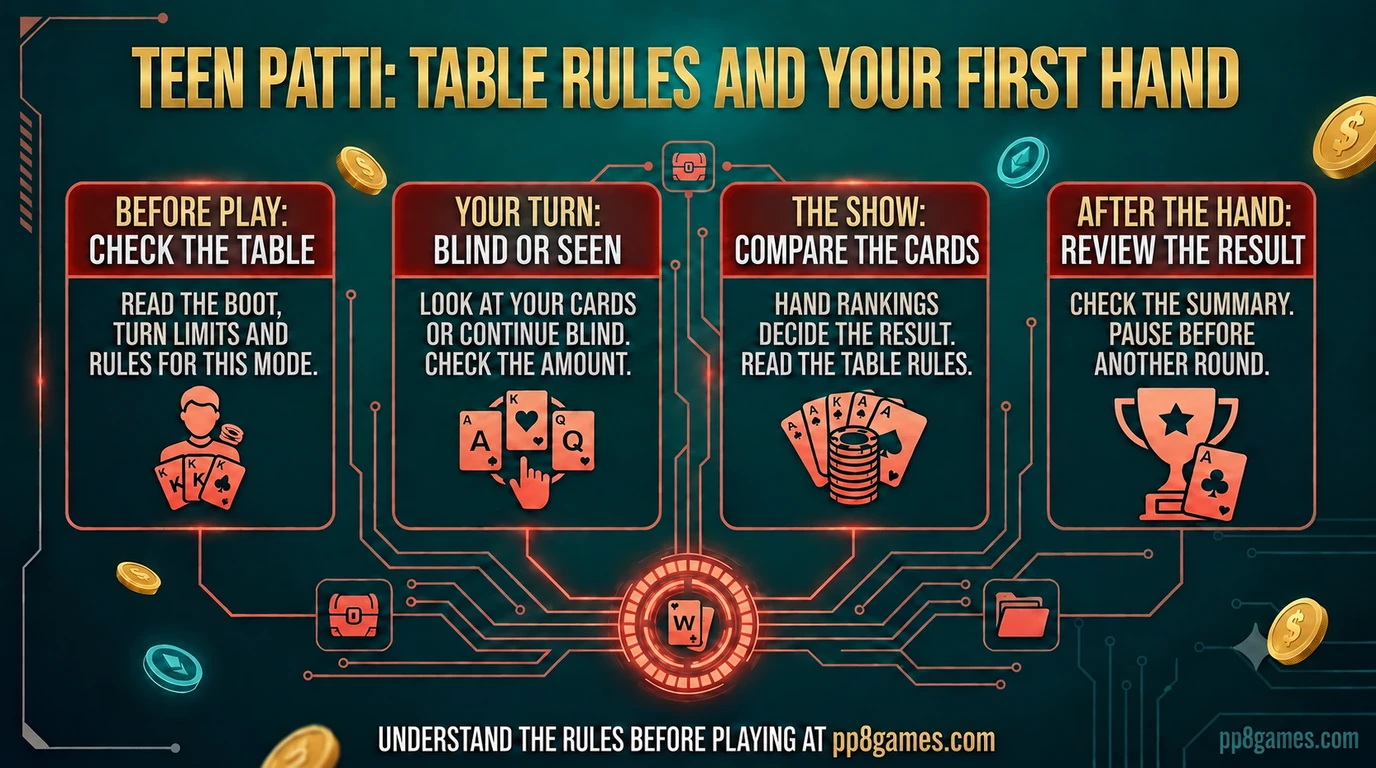
The Teen Patti rules you know from a family gathering may differ from a mobile table's timers and contribution limits. Before following a permitted practice hand on PP8, inspect the controls and the help attached to that particular mode. This guide introduces the labels you are likely to encounter.
Check the Table Before Taking a Seat
On PP8, begin with the mode description, seat information and contribution rules. The boot starts the pot; later actions may involve additional amounts under the table's limits. Check whether the numbers represent practice credits or another type of balance. A larger label does not establish a more suitable table or greater experience. Where money is involved, first establish whether the activity is permitted for you rather than relying on its familiar name.
Track Cards, Turns and Show Conditions
In a typical hand, participating seats receive three cards after the initial contribution. Blind play means acting before viewing those cards; seen play follows viewing them. The table can attach different amounts to those choices. Read the timer and the amount next to each control, then inspect the requirements for a show or sideshow. A permitted demo, where offered, lets you locate these controls without having to learn their positions during an urgent decision.
Understand the Balance Label
Table credits, an entry requirement and an available account amount are different concepts. A number on the screen needs its label and conditions before you can interpret it as redeemable money. This guide does not establish which payment methods or verification rules apply to an individual profile. For an existing transaction, compare the bank record with the service status and retain its reference privately. A person offering to release funds should never receive your OTP or UPI PIN.
Use the Table's Own Rulebook
Read the hand-ranking panel, blind-play limits and show conditions before following a round. Terms such as trail, sequence and pair describe different combinations, but the current mode's rules determine their order and any variation. Recognising a strong hand is not a guarantee of the final result. Keep a finish time in mind while studying quick rounds and review the site's personal-boundaries guidance if a session becomes difficult to leave.
Three Checks Before Your Next Hand
- Inspect the later contribution limits as well as the opening boot; the first number may not describe the whole hand.
- Identify whether the displayed figure is for practice, a promotion or a redeemable balance with separate conditions.
- Read the amount and effect of the selected control before choosing blind, seen or show.
Pehle samjho, phir faisla karo: understand first, then decide. Read the current rules, use only an eligible mode and step away when the interface or its conditions are unclear.